- Daily Cleaning (10–15 Minutes at Closing): Drain the wash tank, scrub scrap trays and pump filters, and detach and flush wash/rinse arms to prevent clogged spray nozzles.
- Periodic Descaling (Every 2–4 Weeks): When chalky white limescale builds up on heating elements and tank walls, run a controlled circulation cycle with a commercial chemical descaler, then flush thoroughly with clean water.
- Mandatory Safety Rule: Never mix acid-based descalers with alkaline dishwasher detergents or chlorine bleach, as the reaction releases hazardous toxic gas.
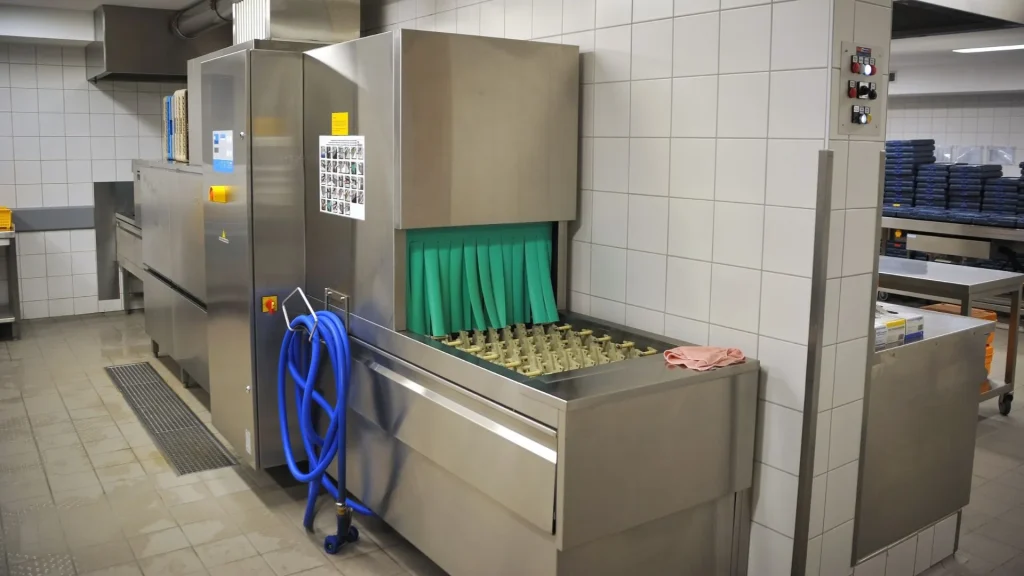
A commercial dishwasher is the backbone of the stewarding area in any hotel, restaurant, or catering kitchen. During peak service hours, undercounter, hood-type, and conveyor machines process hundreds of plates and glasses every hour. Without a consistent cleaning routine, food debris and grease quickly clog spray nozzles, while hard-water minerals calcify into stubborn limescale that forces heating elements to overwork and fail prematurely.
To maintain peak wash performance and deliver spotless, odor-free tableware, kitchen teams need two essential routines: a daily end-of-shift cleaning procedure and periodic descaling. Below is a practical, step-by-step guide on how to clean a commercial dishwasher safely and effectively.
Table of Contents
1. Tools & Chemical Safety Preparation (PPE)
Before disassembling internal dishwasher components, make sure your stewarding staff has the right tools and protective gear ready:
- Personal Protective Equipment (PPE): Chemical-resistant rubber gloves, a waterproof apron, and safety goggles or a face mask when handling concentrated descaling agents.
- Non-Metallic Cleaning Tools: A medium-bristle nylon brush, non-abrasive sponge, clean microfiber cloths, and a wooden toothpick or fine pin to clear blocked nozzle holes without enlarging them.
- Task-Specific Commercial Chemicals: Mild neutral detergent for scrubbing food strainers, plus an industrial-grade chemical descaler and scale remover whenever chalky mineral buildup appears inside the tank.
2. Step-by-Step Daily Commercial Dishwasher Cleaning SOP
Run this 10-to-15-minute routine every night after the final dish rack is washed so grease and food particles never sit stagnant in the wash tank overnight:
- Power Off & Drain the Wash Tank: Switch off the main control panel, remove the overflow drain pipe (or initiate the auto-drain cycle), and let all dirty wash water empty completely. Allow a few minutes for the interior cavity to cool down safely.
- Remove & Scrub Scrap Trays and Pump Filters: Lift out the upper scrap screens and the lower pump suction filter from the tank floor. Empty trapped food waste into a bin, then scrub both filters under running water with neutral detergent until the mesh holes are completely clear of grease.
- Detach & Flush Wash and Rinse Arms: Unscrew or unclip the upper and lower rotating spray arms. Inspect every nozzle jet—if seeds, rice grains, or plastic fragments are wedged inside, gently dislodge them and flush clean water through the hollow arms to clear internal debris.
- Wipe Down Interior Walls, Gaskets & Curtains: Use a soft sponge and damp cloth to wipe away greasy film from the stainless steel tank walls, door tracks, rubber door gaskets, and splash curtains (on conveyor or flight-type units).
- Reassemble & Leave the Door Ajar Overnight: Reinstall the pump filter, scrap trays, and spray arms, spinning the arms by hand to verify smooth rotation. Leave the machine door slightly open overnight so air circulation dries the chamber and prevents musty odors.
3. Step-by-Step Commercial Dishwasher Descaling Procedure
In high-volume kitchens, commercial dishwashers operate at wash temperatures of 55°C–60°C and reach 80°C–85°C during the final sanitizing rinse. When kitchens rely on hard water supplies rich in dissolved calcium and magnesium, constant high heat accelerates mineral crystallization—forming a hard, white limescale crust over booster heating elements and tank walls.
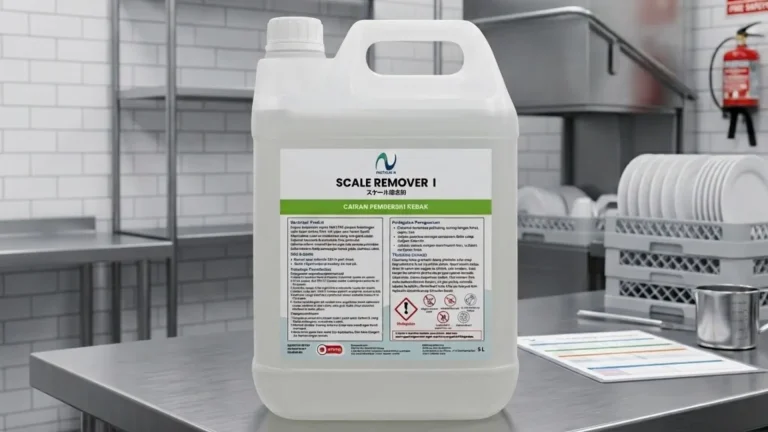
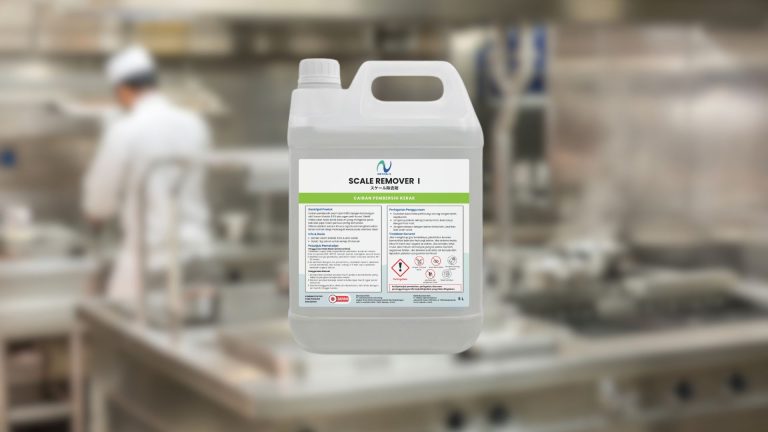
To dissolve limescale rapidly without scraping metal surfaces, use a dedicated commercial descaler such as Niitaka Scale Remover I and follow these steps:
- Disconnect Detergent & Rinse Aid Lines Temporarily: Turn off automatic chemical dosing pumps or pull the suction tubes out of your detergent and rinse aid jerrycans. Commercial dishwashing detergents are strongly alkaline; isolating them prevents chemical neutralization or hazardous vapor reactions when acid descaler enters the tank.
- Refill the Tank with Fresh Water: Once the tank is free of food scraps, close the drain valve and fill the wash tank with clean water up to its standard operating level.
- Dose the Chemical Descaler Accurately: Put on chemical-resistant gloves and protective eyewear, then pour the recommended amount of descaler into the tank according to the product label and the severity of the mineral buildup.
- Run a Continuous Wash Circulation Cycle: Close the door and run the wash cycle for 10 to 15 minutes (or per technical guidelines) so the descaling solution circulates through the wash pump, spray arms, and heating elements until all limescale dissolves.
- Drain Completely & Flush with Clean Rinse Cycles: Switch off the machine, drain the spent descaling solution completely, refill with fresh water, and run 1 to 2 full rinse cycles without chemicals. Once the interior is thoroughly flushed and neutral, reconnect your detergent and rinse aid lines.
4. Recommended HORECA Dishwasher Maintenance Schedule
Use the schedule below to standardize stewarding checklists and preventive engineering inspections across your kitchen facility:
| Frequency | Components to Inspect & Clean | Required Action |
|---|---|---|
| Daily (At Closing) | Wash tank, scrap trays, pump filter, wash & rinse arms, door gaskets | Drain dirty water, scrub food screens, flush nozzle jets, wipe interior walls, and leave door ajar to air-dry. |
| Weekly | Dosing pump tubing, water-level sensors, splash curtains, exterior panels | Check chemical feed lines for blockages, clean soap residue off level probes, and polish exterior stainless steel. |
| Every 2–4 Weeks | Heating elements, inner tank walls, rinse booster & internal piping | Perform a full chemical descaling cycle to strip limescale deposits and restore heat-transfer efficiency. |
5. Critical Mistakes Your Stewarding Team Must Avoid
Improper cleaning habits in busy commercial kitchens often lead to costly spare-part replacements and avoidable safety hazards. Ensure your team never makes these four mistakes:
- Mixing Acid Descalers with Chlorine Bleach or Alkaline Detergents: According to chemical safety guidance from the Washington State Department of Health on bleach mixing dangers, combining acids with sodium hypochlorite bleach releases toxic chlorine gas that causes severe respiratory irritation and lung injury in enclosed kitchens.
- Scraping Heating Elements with Wire Brushes or Metal Scrapers: Scratching stainless steel tanks or heating elements strips away the protective passive oxide layer, accelerating rust, pitting, and premature element burnout.
- Leaving Descaling Solution Sitting Unrinsed: Always follow recommended circulation times and flush the tank thoroughly with fresh water afterward to protect rubber seals and metal fittings.
- Relying on Household Vinegar or Citric Acid for Heavy Industrial Scale: Household acids react too slowly on thick commercial limescale and lack controlled industrial formulations calibrated for heavy-duty kitchen equipment.
To protect energy efficiency and extend the service life of your dishwashing equipment, consult our technical team regarding commercial dishwasher scale remover solutions formulated under the quality standards of Niitaka Co., Ltd. Japan.
The technical team at PT Niitaka Japindo Makmur supports hotels, restaurants, catering central kitchens, and regional distributors across Indonesia with Japanese-standard kitchen chemicals, complete SDS/MSDS documentation, and on-site demos. Reach out directly via the WhatsApp button below.
Frequently Asked Questions (FAQ)
A thorough end-of-shift closing routine draining the tank, scrubbing food scrap trays and pump filters, and flushing the wash and rinse arms takes roughly 10 to 15 minutes when performed consistently every night.
Commercial dishwashers should be descaled every 2 to 4 weeks, or sooner if you notice white chalky mineral buildup on heating elements and tank walls, reduced spray nozzle pressure, or cloudy water spots on glassware.
Commercial machine detergents are strongly alkaline while descalers are acidic. Disconnecting the chemical feed tubes prevents both solutions from mixing inside the wash tank, preserving descaling strength and preventing harmful vapor reactions.
No. Wire brushes or metal scrapers scratch the protective surface of stainless steel heating elements and tank walls, accelerating corrosion and leading to costly equipment failure.
Yes, it is safe for commercial dishwashers when diluted according to technical dosing instructions, never mixed with other cleaning agents, and thoroughly rinsed with clean water after the descaling cycle.