Lime scale buildup inside commercial dishwashers in restaurants and hotels can clog internal piping, trigger foul odors, and increase electricity consumption by up to 20%, requiring periodic treatment with Niitaka Scale Remover. Specially formulated with 9.9% Hydrochloric Acid to rapidly break down stubborn mineral deposits, this Japanese-standard chemical descaler is enriched with specialized corrosion inhibitors to ensure it is 100% safe for Stainless Steel (SUS304 and SUS316) without causing rusting or discoloration. Simply apply at a 5% dilution ratio (50 grams per 1 Liter of hot water at min. 50°C) during an empty-machine cycle, follow with a neutralizer rinse, and strictly avoid mixing with chlorine-based products to prevent dangerous toxic gas release.
Amid the fast-paced rhythm of hotel and restaurant kitchens, commercial dishwashers are often expected to run flawlessly—until major problems arise: plates feel greasy, glassware looks cloudy, or the unit shuts down during peak service hours. The root cause is almost always the same: hidden mineral lime scale buildup that went unnoticed during daily operations.
To prevent unnecessary energy waste and costly operational downtime, PT Niitaka Japindo Makmur presents this routine maintenance guide along with a precision scale-removal solution using Japanese-standard Scale Remover.
Table of Contents
4 Indicators Your HORECA Dishwasher Is Suffering from Scale Buildup
Lime scale works silently inside hidden internal machine components. Make sure your kitchen staff keeps an eye out for these early warning signs:
- Cloudy Finish & Water Spots: Glassware and ceramic tableware retain a thin white film even after undergoing a full rinse cycle.
- Slow Water Heating: Scale coating the heating elements acts as a thermal insulator, making it take significantly longer to reach proper wash temperatures.
- Reduced Spray Pressure: Calcium deposits clog nozzle orifices on wash arms, restricting water circulation pressure.
- Foul & Unpleasant Odors: The porous texture of scale deposits creates an ideal breeding ground for trapped food waste and bacteria.
Financial Impact of Lime Scale on Operational Costs
Allowing lime scale to accumulate is not just an aesthetic concern in the kitchen—it is a direct threat to your bottom line. A 1.5 mm layer of scale on heating elements can increase electrical consumption by **15% to 20%** as the machine works extra hard to achieve required sanitation temperatures.
Furthermore, complete blockages in circulation lines risk burning out heating elements, leading to expensive repairs and unscheduled kitchen downtime during high-volume service periods.
Comprehensive Scale Remover Solution: Tough Chemical Descaler for HORECA Dishwashers
Complete Treatment Using Niitaka Scale Remover
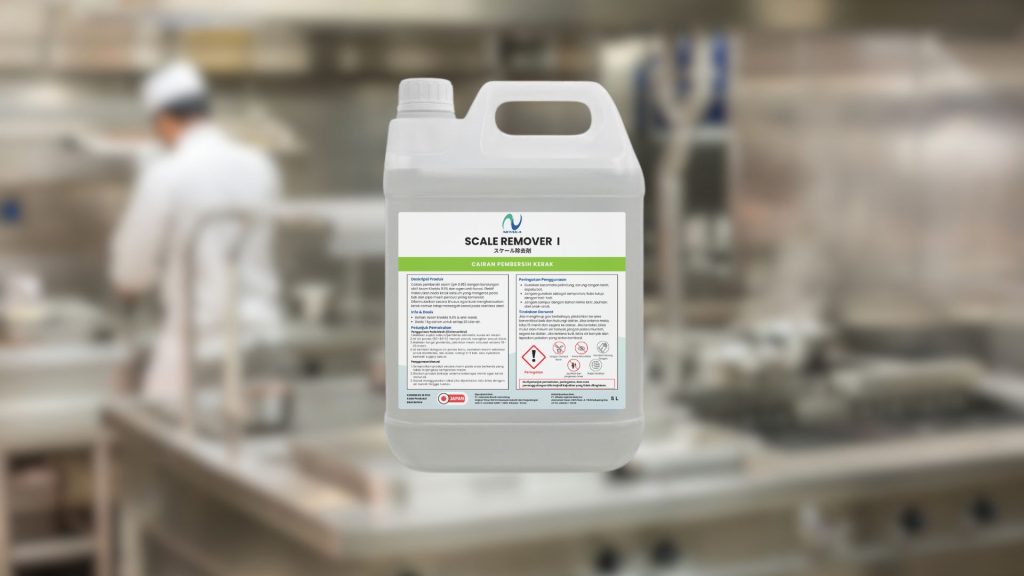
Dissolving calcium and magnesium bonds without degrading machine components requires a precisely formulated acidic solution. Scale Remover by PT Niitaka Japindo Makmur combines 9.9% Hydrochloric Acid with advanced corrosion inhibitors.
| Formula Feature | Benefit for HORECA Machinery |
|---|---|
| Controlled Acid (9.9% HCl) | Fast-reacting formula dissolves heavy scale without manual scraping that could damage the tank. |
| Specialized Corrosion Inhibitor | 100% safe for Stainless Steel (SUS304 & SUS316), preventing metal surface etching or discoloration. |
| Deodorizing Properties | Eliminates foul odor sources trapped inside tank scale crevices. |
Routine Descaling SOP & Preventing Recurring Scale
Perform periodic descaling every 1 to 3 months, depending on the water hardness at your facility. Use a standard 5% dilution concentration (50 grams per 1 Liter of hot water at min. 50°C).
Operational Safety Tips:
- Never Mix Acid with Chlorine: Always ensure the unit is free of chlorine-based detergents before adding descaler to avoid toxic chlorine gas liberation.
- Neutralization Step: After circulating the descaler solution, perform a rinse cycle with a neutralizer and clean water to restore safe pH levels.
- Wear Proper PPE: Ensure kitchen staff wear rubber gloves and protective eyewear when handling concentrated chemical solutions.
HORECA Commercial Kitchen Maintenance Consultation
Protect your equipment investments and optimize kitchen energy efficiency with an effective maintenance strategy. The expert technical team at PT Niitaka Japindo Makmur is ready to support your kitchen hygiene audits and supply Japanese-standard maintenance chemicals.
Contact PT Niitaka Japindo Makmur today to discuss your commercial dishwasher maintenance needs via WhatsApp or through our online inquiry form.
Lime scale forms from calcium and magnesium mineral deposits in water that is continuously heated during wash cycles. Over time, these minerals precipitate and harden inside tanks, heating elements, and rinse nozzles.
Scale acts as a thermal insulator, forcing heating elements to consume up to 20% more electricity. It also clogs spray nozzles, causes heating element burnout, and traps food waste that creates persistent foul odors.
Yes, completely safe. It is specifically formulated with specialized corrosion inhibitors that protect commercial kitchen-grade Stainless Steel (SUS304 and SUS316) from surface etching or discoloration.
ABSOLUTELY NOT. Mixing acidic descalers with chlorine-based detergents or bleach triggers a chemical reaction that releases highly toxic chlorine gas, posing serious health hazards to kitchen personnel.
It is not recommended. The formula is specifically engineered and tested for Stainless Steel. Avoid using it on aluminium or mild steel, as acidic solutions can react with and corrode non-stainless metals.
Dilute to a 5% concentration (50 grams per 1 Liter of hot water at min. 50°C). Turn off detergent dispensers, fill the tank with hot water and descaler, circulate in an empty machine (15–20 minutes for conveyor types / 10 cycles for door types), then neutralize and rinse thoroughly with clean water.