In today’s logistics and distribution environment, operational speed and efficiency are critical. Warehouses with high traffic movement require access systems that are fast, reliable, and capable of supporting continuous forklift and cargo activity.
An automatic warehouse door is no longer just an entry point—it is a key component of a modern operational system designed to enhance productivity, safety, and environmental control.
What Is an Automatic Warehouse Door?
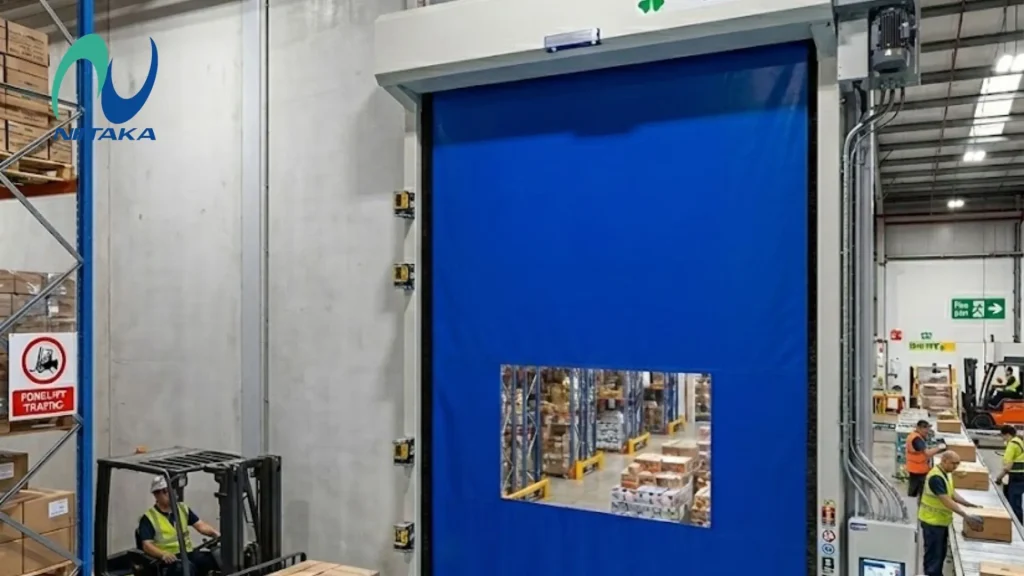
An automatic warehouse door is an industrial door system designed to open and close automatically using motors, sensors, or integrated control systems.
Unlike conventional manual doors, automatic systems:
Reduce waiting time during loading and unloading
Close automatically to maintain security
Minimize physical contact
Support smoother workflow in high-traffic environments
In warehouses with frequent door cycles, automation significantly improves operational efficiency.
Why Modern Warehouses Need Automated Door Systems
Many facilities still operate with manual or outdated door systems, which can cause:
Doors left open for extended periods
Temperature loss in air-conditioned or cold storage areas
Increased dust and pest infiltration
Higher risk of forklift impact damage
Slower loading and unloading processes
An automatic warehouse door helps address these operational challenges by providing controlled and responsive access.
Strategic Benefits of Automatic Warehouse Doors
Faster Operational Flow
Rapid opening and closing cycles help maintain uninterrupted goods movement, especially in busy distribution centers.
Environmental Control
In temperature-controlled warehouses, automatic closing reduces energy loss and improves climate stability.
Enhanced Security
Automated systems can be integrated with access control, sensors, and security monitoring systems.
Reduced Damage Risk
Industrial-grade designs often include impact-resistant features that minimize downtime caused by accidental collisions.
How to Choose the Right Automatic Warehouse Door
Selecting the right system depends on operational requirements, including:
Daily opening and closing frequency
Type of vehicles operating inside the facility
Need for temperature control
Security requirements
Door placement (external or internal zones)
A proper assessment ensures the door system supports long-term operational goals rather than becoming a maintenance burden.
Long-Term Investment Value
Installing an automatic warehouse door is not merely a technical upgrade—it is a strategic investment.
Over time, businesses may experience:
Reduced energy consumption
Lower maintenance costs
Improved employee productivity
More standardized and efficient operations
In competitive logistics environments, optimized access systems contribute directly to performance and cost control.
When Should You Upgrade?
Consider upgrading to an automatic warehouse door if:
Traffic volume has increased significantly
Existing doors frequently require repairs
Energy costs are rising due to temperature leakage
Operational flow feels inefficient
Modern automation solutions can transform warehouse access from a bottleneck into a productivity enhancer.
Conclusion
An automatic warehouse door plays a vital role in improving warehouse efficiency, environmental control, and security. By implementing the right system, businesses can streamline logistics operations while reducing operational risks and long-term costs.
Choosing the appropriate solution depends on your warehouse’s activity level, environmental requirements, and security standards—but automation is increasingly becoming the industry standard for high-performance facilities.