Production machinery has stopped because a spring has broken, while the original OEM spare part has been discontinued or requires several months of lead time. Your maintenance team needs to restore the machine to operation, but the factory has no original engineering drawings, blueprints, or CAD files for the component. In this situation, custom spring manufacturing without a drawing becomes a practical procurement solution, provided the replacement is developed through proper engineering analysis rather than simply copying the damaged spring.
PT Niitaka Japindo Makmur, the official Indonesian partner of Tokai Spring Industries, Japan, provides industrial spring replacement solutions through a specialized reverse engineering service. Customers can start by submitting a physical sample, even if it is broken, worn, corroded, or permanently deformed, together with relevant machine and operating condition information.
Tokai Spring’s high-mix, low-volume manufacturing capability supports emergency replacement requirements starting from just 1 piece up to thousands of units. The objective is not merely to reproduce the physical appearance of the original component, but to reconstruct its functional specifications so that the replacement spring meets the machine’s load requirements, installation space, and operating cycle.
Table of Contents
- Why Does Manually Copying a Broken Spring Often Fail?
- What Is Tokai Spring’s Reverse Engineering Service?
- 4 Easy Steps to Order Custom Springs Without a Drawing from PT Niitaka
- Comparison: Conventional Spring Workshops vs. Tokai Spring Reverse Engineering
- Types of Springs Available Through Reverse Engineering
- Request a Custom Spring Consultation Without a Drawing
Why Does Manually Copying a Broken Spring Often Fail?
A spring that has already been in service no longer represents its original design accurately. In a compression spring, repeated loading or excessive stress can cause permanent set, a condition in which the spring’s free length decreases and its force characteristics change.
Corrosion, elevated operating temperatures, and surface deterioration can also affect material performance. If the free length of a used spring is directly adopted as the manufacturing reference, the replacement may have incorrect preload, travel, or operating force.
Another common issue is incorrectly measuring the pitch, or the distance between adjacent coils. A deformed spring may no longer have uniform coil spacing. Measuring only one section without checking the total coils, active coils, wire diameter, outer diameter (OD), inner diameter (ID), free length, end configuration, and installed condition can produce a replacement that looks correct but does not function properly inside the machine.
Material selection is equally important and cannot be determined reliably from visual appearance alone. Carbon steel, stainless steel SUS304 or SUS316, and nickel-based alloys such as Inconel have different mechanical strength, corrosion resistance, and temperature performance characteristics.
Incorrect material selection can accelerate fatigue cracking, corrosion, or force loss. This is why custom springs manufactured from existing samples require a combination of dimensional inspection, material identification, and engineering calculations.
What Is Tokai Spring’s Reverse Engineering Service?
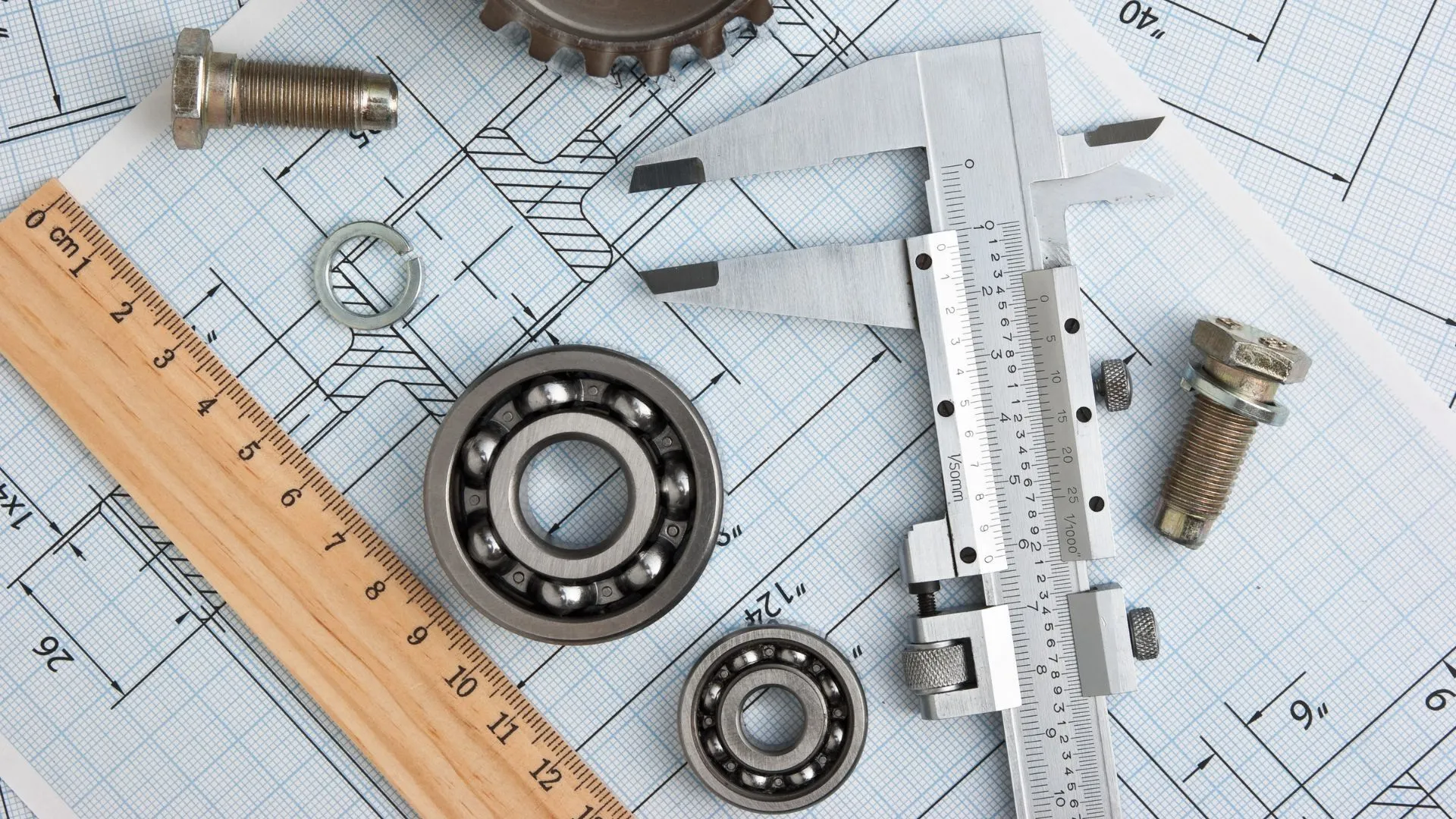
Industrial spring reverse engineering is the process of reconstructing a component’s function and specifications from a physical sample and its application data. Unlike conventional copying, which simply reproduces the existing geometry, engineering reconstruction aims to determine the spring’s original design specifications before wear or deformation occurred, then validate them against actual operating conditions.
Through PT Niitaka, physical samples and technical information can be forwarded to Tokai Spring engineers in Japan. The inspection process covers precision dimensions such as wire diameter, OD/ID, free length, total coil count, pitch, and end configuration.
When the sample is broken or corroded, measurements are evaluated using the remaining representative sections and available machine data. Dimensions that have already changed due to deformation are not automatically treated as the original design specifications.
Material analysis may include compositional examination, including spectrometric testing where necessary, to help identify material families such as carbon steel, stainless steel SUS304/SUS316, or Inconel. Additional methods, such as hardness testing, may also be considered depending on the sample condition.
These findings provide important input for material selection and manufacturing processes, rather than serving as the sole basis for determining the material grade.
During the design stage, engineers reconstruct the technical CAD drawing and evaluate critical operating parameters, including load, deflection or stroke, installation space, temperature, operating frequency, corrosive environments, and potential buckling or localized stress.
Calculations may refer to the engineering principles in JIS B 2704-1:2018 for helical compression, extension, and torsion springs. For piano wire materials, JIS G 3522:2025 is relevant as one of the material references.
The applicable standards and testing methods depend on the spring type and project specifications. Referencing a standard does not automatically mean that every manufactured spring is certified. Further information about Japanese industrial standards is available through the Japanese Industrial Standards (JIS) portal.
With this approach, the engineering team does not simply reproduce the shape of a broken component. The safety factor, operating stress, and spring fatigue life are evaluated based on the available application data.
If the analysis identifies opportunities for improvement, the design may be optimized to extend service life or improve resistance to actual operating conditions. The final design must still maintain the required functionality, interface dimensions, and machine limitations.
This process is supported by the precision spring manufacturing experience and production technology of Tokai Spring Industries, Japan, which provides custom spring manufacturing solutions for various industrial applications.
4 Easy Steps to Order Custom Springs Without a Drawing from PT Niitaka
- Submit a physical sample or initial technical information.
Send your existing spring, including broken, corroded, worn, or deformed components. Provide photographs from multiple angles with a ruler or measuring scale for reference. If a physical sample is unavailable, submit photographs of the installation location, machine type, estimated dimensions, and operating conditions such as temperature, load, cycle speed, water exposure, chemical exposure, or corrosion. This information helps engineers distinguish the original design geometry from deformation caused by service conditions.
- Dimensional inspection and material analysis.
Engineers inspect the wire diameter, OD/ID, free length, coil count, pitch, end configuration, and surface condition. Material analysis is performed according to project requirements and sample suitability. The measurement results are evaluated alongside the machine’s load requirements and available installation space to establish technically appropriate specifications.
- CAD drawing reconstruction and quotation validation.
The inspection results are used to reconstruct the CAD drawing and evaluate the spring’s operating characteristics. The engineering team clarifies the working position, required force, compression or extension limits, dimensional tolerances, material, surface finishing, order quantity, and target delivery schedule. Once the technical scope has been agreed upon, the quotation and estimated lead time can be validated before manufacturing begins.
- Precision manufacturing and delivery.
Once the specifications are approved, the spring is manufactured through Tokai Spring’s production facilities in Japan. Its high-mix, low-volume manufacturing model supports orders starting from just 1 piece for specialized replacement requirements, as well as larger production quantities of up to thousands of units, depending on the design and manufacturing capacity. Final inspection follows the agreed product characteristics and project requirements.
Related Article:
Understanding Why Industrial Springs Break: Fatigue Life and Precision Engineering Solutions
Comparison: Conventional Spring Workshops vs. Tokai Spring Reverse Engineering
The primary difference lies in the engineering approach used to determine the replacement specifications. Local spring workshops may be suitable for simple applications or urgent repair work. However, a process based solely on manual replication has limitations when material properties, operating loads, and fatigue life are critical factors.
| Parameter | Conventional Spring Workshop | Tokai Spring Reverse Engineering |
|---|---|---|
| Measurement Reference | Based on the physical shape and dimensions of the received sample; existing deformation may be reproduced. | Multi-parameter dimensional inspection evaluated together with sample condition and application data. |
| Material Analysis | Often based on estimation or available material stock. | Material identification and alternative material evaluation based on operating requirements. |
| Minimum Order Quantity (MOQ) | Depends on the workshop’s policies and manufacturing capabilities. | Orders can start from 1 piece up to thousands of units, depending on specifications. |
| Service Life (Fatigue Life) | Not always calculated; recurring failures may occur if the original design is not evaluated. | Stress, cyclic loading, and fatigue life are evaluated based on available application data. |
| Drawing Documentation | Not always available or formally documented. | CAD drawing reconstruction is included in the engineering process. |
This table illustrates general differences in working approaches and is not intended to represent every local spring workshop. When evaluating suppliers, purchasing teams should still verify inspection methods, dimensional tolerances, material specifications, test results, and accompanying documentation.
Types of Springs Available Through Reverse Engineering
Industrial spring replacement requirements may involve several configurations, including:
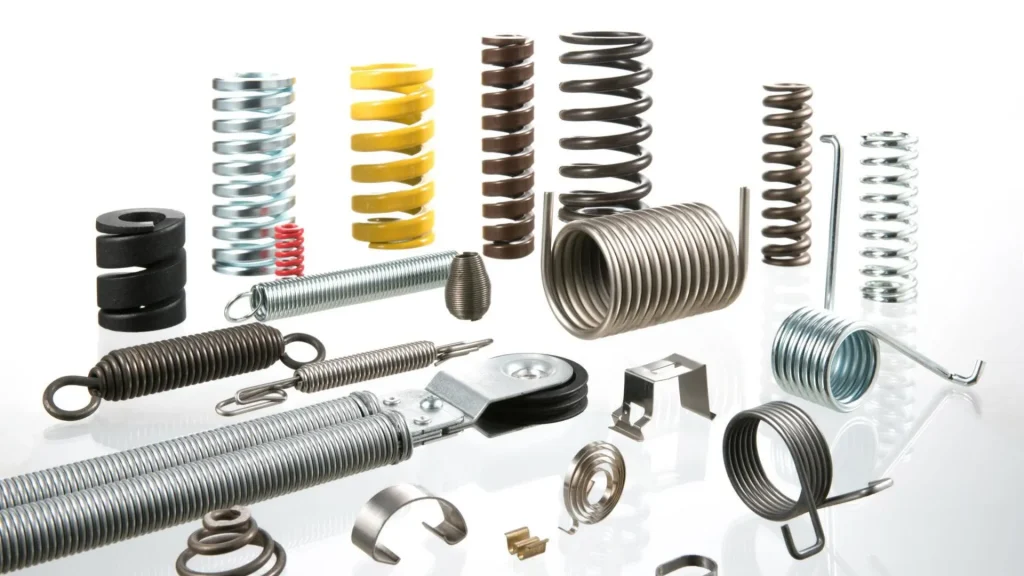
- Compression Spring: Designed to resist compressive loads and return to its original position when the load is released.
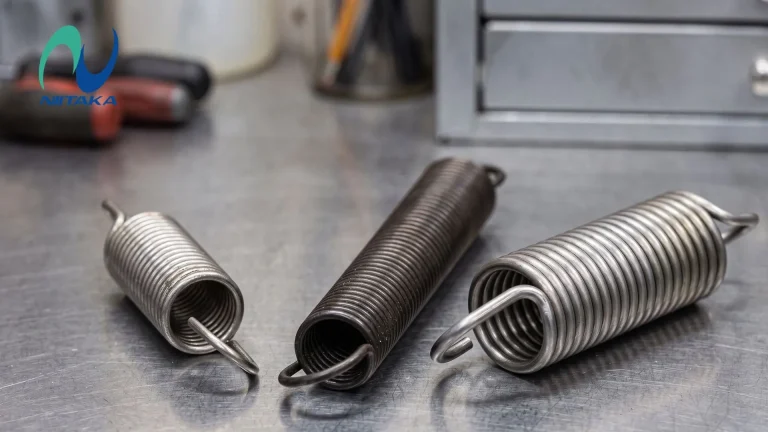
- Extension Spring: Operates under tensile loads and commonly features hook or loop configurations.
- Torsion Spring: Generates rotational torque for hinges, levers, and actuator mechanisms.
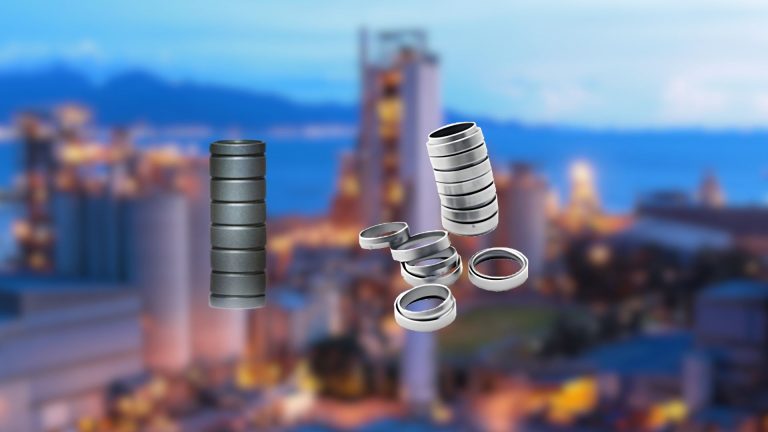
- Disc Spring (Belleville Washer): Produces axial force within a compact installation space.
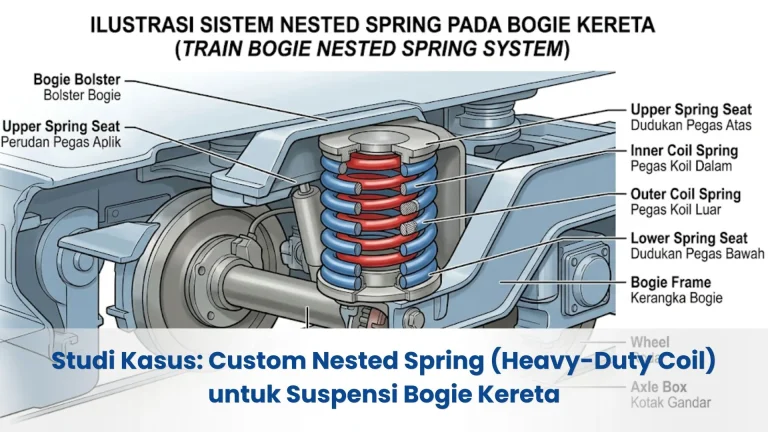
- Conical Spring: Features a cone-shaped configuration for specific space requirements and compression characteristics.
- Flat Spiral Spring: Stores rotational energy for return mechanisms and drive applications.
Each spring type requires different design parameters and inspection methods. Therefore, information about the component’s function and installation position is just as important as its physical dimensions.
For industrial procurement requirements and technical consultations, explore the trusted custom spring makers services from PT Niitaka Japindo Makmur.
Request a Custom Spring Consultation Without a Drawing
If your factory machinery has stopped due to a broken spring and the original engineering drawing is unavailable, replacement procurement does not have to depend entirely on finding the original OEM spare part.
Send your spring photographs or physical samples, together with machine information, load requirements, operating temperature, and environmental conditions, to PT Niitaka Japindo Makmur.
Our team can help evaluate the feasibility of reverse engineering, identify additional technical information required, and discuss Tokai Spring production options starting from just one unit.
Contact our team through the WhatsApp consultation button or inquiry form at the bottom of this page to begin your industrial spring replacement evaluation.