In the operations of the HORECA (Hotel, Restaurant, Cafe) industry and large-scale commercial kitchens, the cleanliness and aesthetics of tableware are key to service standards. Have you ever served a drink to a customer, only to find the glass looking dull or covered in white spots? In the professional F&B world, water spots or wet dishes during busy operational hours are not just trivial matters, but systemic issues that can slow down workflow and lower your restaurant’s reputation.
The best solution to overcome this problem is the use of a specialized rinsing fluid, commonly known as a rinse aid. As a mandatory component of commercial dishwashers, rinse aid takes full control during the final washing stage. Let’s explore the functions, mechanics, and reasons why Niitaka’s rinse aid is specifically designed to maintain the highest hygiene standards in your HORECA facility.
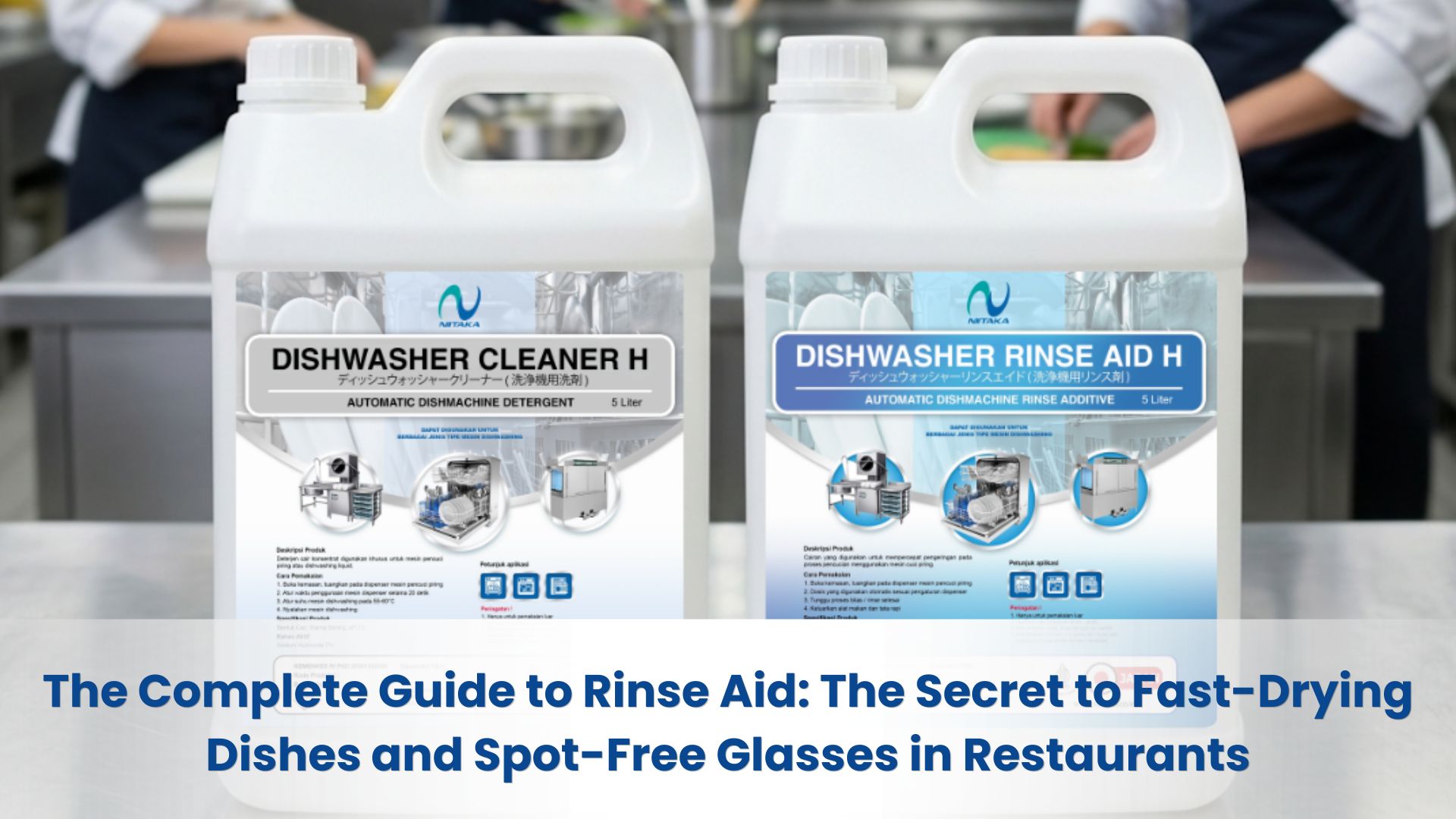 The use of rinse aid ensures crystal-clear glassware free of water spots and dries quickly automatically without the need for manual wiping.
Why Must Restaurants, Hotels & Cafes Use a Rinse Aid?
Unlike conventional dishwashing soaps or detergents, rinse aid offers a crucial combination of chemical functions for professional culinary business operations:
- Prevent Water Spots: Lowers the surface tension of water so it slides off (sheeting action) without leaving mineral deposits.
- Flash Drying: Tableware dries instantly as soon as it comes out of the machine without the need for manual wiping.
- Efficient & Hygienic: Prevents the risk of bacterial cross-contamination from using wiping cloths and speeds up table turnover.
Key Functions of Rinse Aid in Commercial Dishwasher Systems
Niitaka provides specialized chemical solutions designed to meet the intensity, hygiene demands, and cost efficiency in your professional kitchen.
1. Spot-Free & Maintains Tableware Shine
Kitchen operational water generally contains natural minerals like calcium and magnesium. If water droplets from the wash are left to evaporate on glassware or stainless steel cutlery, these minerals are left behind as dull white marks (water spots). Rinse aid breaks water molecules into a thin layer that drops off instantly, carrying away mineral and soap residue.
2. Automatic Flash Drying Acceleration
During peak hours, kitchen staff (stewards) do not have the time to dry dishes manually one by one. With the help of high-temperature rinse water (above 80°C) and the surfactant reaction of the rinse aid, plates and glasses undergo flash drying, making them ready for reuse or storage in seconds.
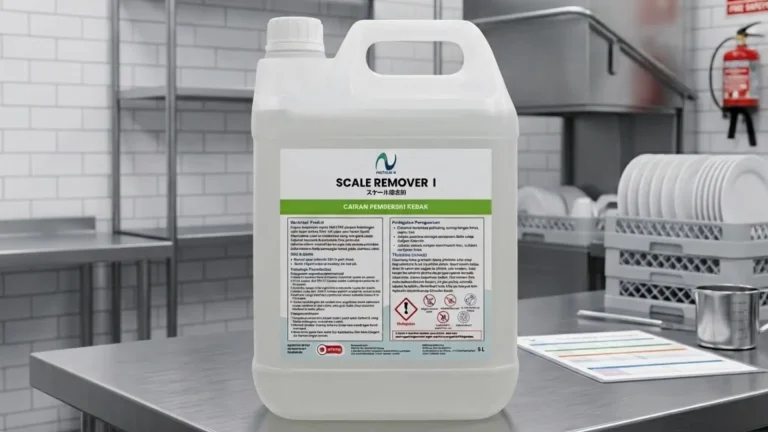
3. Machine Protection from Mineral Scale Buildup
Mineral residues not only ruin the appearance of glasses but also risk adhering to the walls, pipes, and internal components of the dishwasher. Consistent use of rinse aid minimizes scale buildup, maintains optimal water spray pressure, and extends the lifespan of the machine.
The Vital Duo: Why Cleaner & Rinse Aid Should Never Be Separated
A fundamental rule in commercial kitchen operations is understanding that Dishwasher Cleaner and Rinse Aid work as a complementary system:
- Dishwasher Cleaner (Alkaline): Works during the Main Wash stage to break down stubborn grease, oil, and food protein residue.
- Rinse Aid (Acidic/Surfactant): Works during the Final Rinse stage to neutralize leftover alkali, speed up rinsing, and dry the tableware.
Important Note: These two chemicals must not be mixed manually in a single jerrycan because their acidic and alkaline properties will neutralize each other chemically, destroying the function of both liquids.
Understanding Dishwashers for Restaurants & Hotels: Functions, Operations & Their Role in Professional Kitchens
Automatic Dispensing System for Maximum Efficiency
To dispense Cleaner and Rinse Aid precisely during different washing phases, using an Automatic Dispenser System is an absolute necessity for HORECA businesses:
- Precise Measured Doses: Draws liquid directly from the 5L jerrycan at the ideal dosage without the risk of human error from kitchen staff.
- Zero Waste: Locks in monthly operational expenses so that chemical usage is always economical and measurable.
- Consistent Cleanliness Results: Guarantees every batch of plates and glasses comes out of the machine completely hygienic and sparkling.
Consult Your Dishwasher Chemical Needs With Us
Choosing the wrong type of soap or using manual measurements can lead to dull dishes, wasted costs, and damaged machine components. Ensure your restaurant, hotel, or cafe uses high-quality commercial dishwasher chemicals with Japanese standards from Niitaka, operated with an accurate automatic dispensing system.
Contact the Niitaka team today, and let’s find the most efficient, hygienic, and cost-effective commercial kitchen washing system solution for your HORECA facility by clicking the button to connect directly via WhatsApp or by filling out the form below.