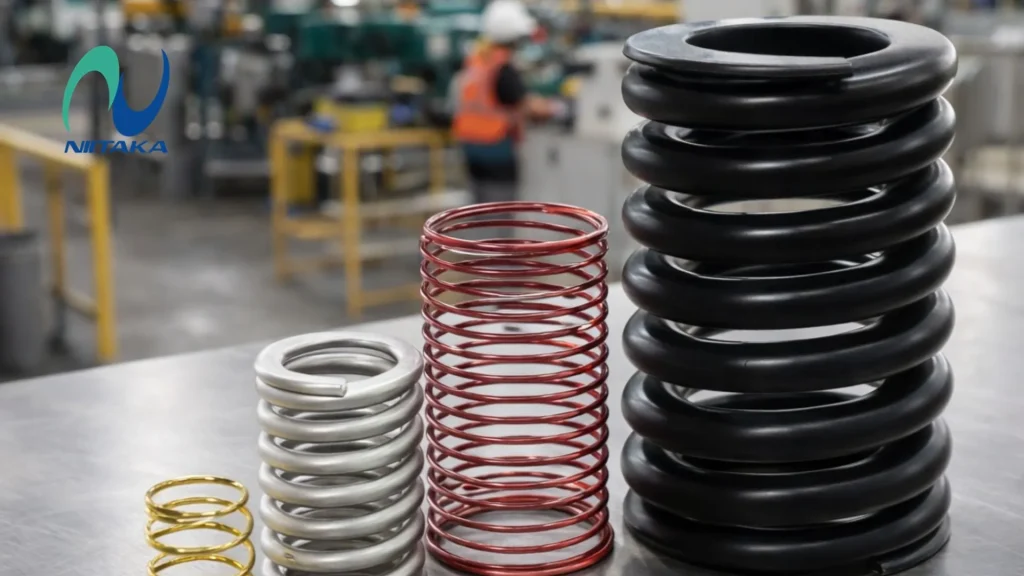
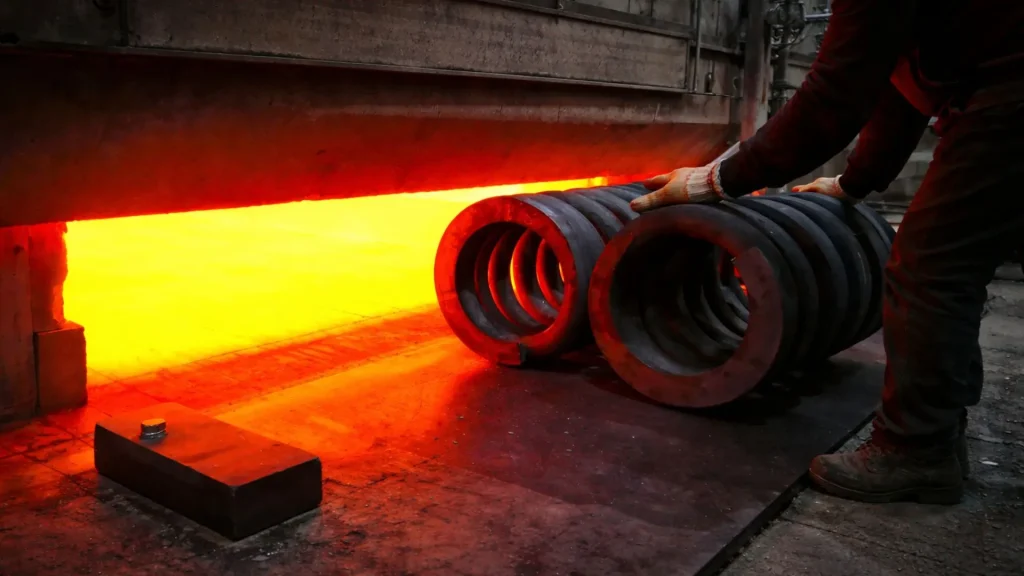

Standard springs are suitable for general applications with stable loads and loose tolerances. However, when space constraints are tight, operating cycles are high, or performance consistency is critical, custom springs become a technical requirement rather than an option. In such conditions, a properly designed custom spring can significantly improve service life, reduce downtime, and stabilize system performance.
In many industrial applications, springs are often treated as simple components. As long as the size fits and the force feels “close enough,” the spring is considered acceptable. This approach may work in non-critical systems, but it quickly becomes problematic when machines operate at high speed, under repetitive loading, or within tight tolerances.
This is where the difference between standard springs and custom springs becomes important.
Standard springs are mass-produced with predefined specifications. Spring rate, free length, wire diameter, and material are fixed to meet common use cases. These springs are widely available and suitable for general machinery, basic mechanisms, or early-stage prototyping.
However, because they are designed for average conditions, standard springs offer limited flexibility in terms of performance optimization, fatigue life, and dimensional tolerance.
In real-world industrial environments, spring failure rarely happens instantly. It usually starts with subtle symptoms such as force deviation, slower response, or premature fatigue.
These issues commonly arise when:
Installation space is limited and the spring operates close to its elastic limit
The application involves high cycle loading, often hundreds of thousands to millions of cycles per year
The environment includes heat, corrosion, vibration, or chemical exposure
Force tolerance requirements are tight, often within ±5 percent or less
Under these conditions, standard springs may function initially, but long-term reliability becomes difficult to maintain.
Custom springs are engineered based on actual operating conditions rather than generic assumptions. The design process considers load, deflection, cycle life, environment, and available installation space.
From a technical perspective, custom springs are typically required when:
The application exceeds 500,000 cycles and fatigue life becomes critical
A specific spring rate or load curve is needed that standard products cannot provide
Standard materials cannot withstand temperature, corrosion, or chemical exposure
Spring failure could stop production, damage equipment, or affect product quality
In these cases, the cost of a custom spring is often negligible compared to the cost of unplanned downtime or repeated replacements.
One of the main advantages of custom springs is performance consistency. Through controlled design and manufacturing processes, force variation can be kept significantly tighter than with off-the-shelf products.
In precision applications, even a small deviation in spring force can affect machine behavior. Custom springs allow these parameters to be defined during the design stage rather than adjusted through trial and error on the production floor.
A custom spring is not simply a spring with different dimensions. It is the result of engineering analysis, material selection, and testing.
This is why the choice of manufacturer is critical. Experienced spring manufacturers do more than follow drawings. They review design assumptions, evaluate fatigue limits, and provide test data to ensure long-term reliability.
This engineering-driven approach is one of the reasons companies like Tokai Spring Industries, Inc. specialize in custom spring production. Their focus is on translating specific customer requirements into reliable, high-precision springs, including small-lot production for prototypes and replacement parts.
For a detailed overview of their manufacturing philosophy and capabilities, you can read the following article:
At first glance, custom springs often appear more expensive than standard options. However, a realistic cost evaluation should include:
In many industrial environments, a single spring failure can cost significantly more than the price difference between standard and custom springs.
Standard springs have their place in general applications. However, when machines operate near design limits, require consistent force output, or face demanding environments, custom springs offer a more reliable technical solution.
Choosing best custom springs supplier is not about over-engineering. It is about ensuring long-term performance, stability, and predictability in critical mechanical systems.
If you are evaluating whether your application still fits standard springs or requires a custom solution, our team is ready to assist.
Contact us via WhatsApp for custom spring design consultation and we will help connect your requirements with high-precision Japanese spring manufacturing.
Summary Food warming fuel is an essential solution for hotels, restaurants, and catering businesses that need to…
Maintaining smooth factory operations while preserving room temperature and cleanliness is a major challenge in the modern…
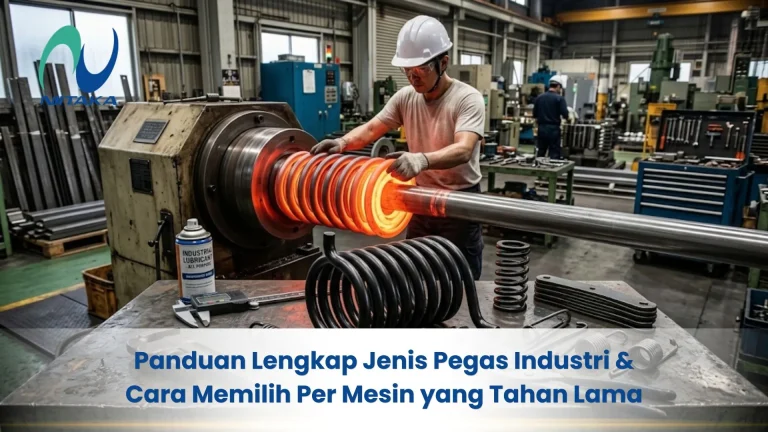
Summary Factory downtime due to the failure of small components like springs can incur massive operational costs….
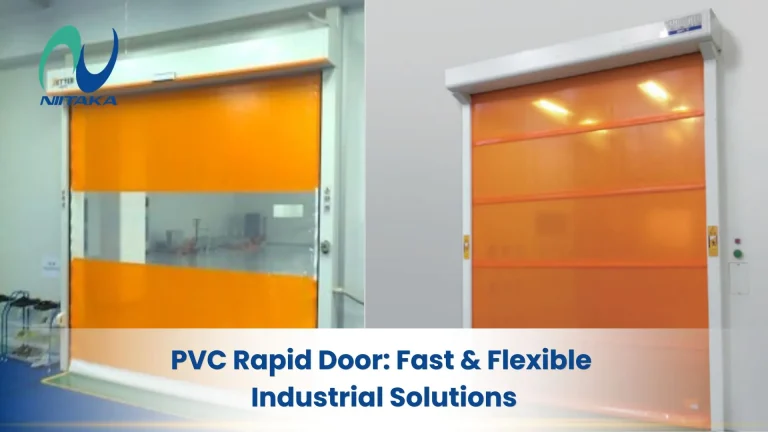
Summary PVC rapid doors are high-speed, automatic industrial doors designed to maximize operational efficiency and safety. Made…

Summary Japanese industrial rolling doors are designed for factories that prioritize reliability, controlled movement, and predictable maintenance….
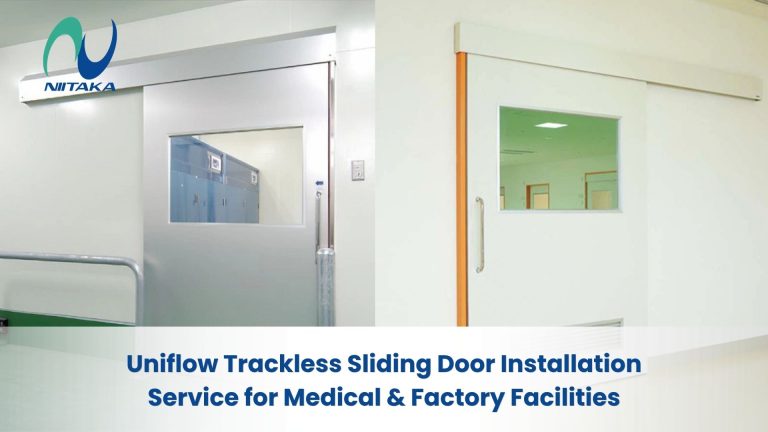
Summary For hospitals and factories that require traffic efficiency and high hygiene standards, PT Niitaka Japindo Makmur…