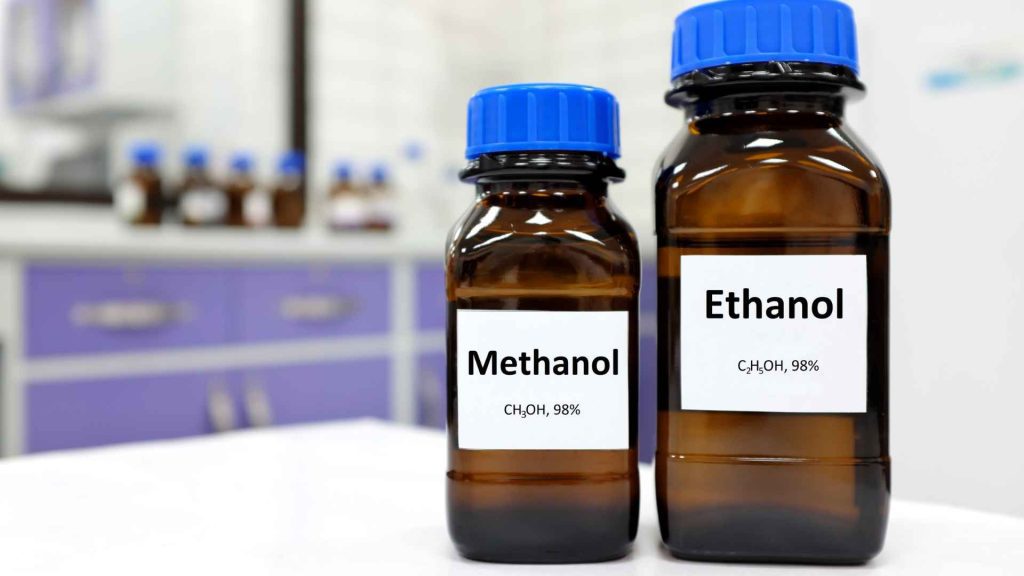
The surge in hygiene demands within the HORECA (Hotel, Restaurant, Cafe) industry and Food Processing Factories has brought a serious issue to light: the circulation of cheap, counterfeit sanitizer liquids. Many of these unlicensed products use Methanol as a base substitute for Ethanol.
For operational managers and purchasing teams, the inability to distinguish between the two is not merely a procurement error, but a serious health threat and a severe regulatory violation.
Let us examine the scientific facts and legal reasons why the use of Methanol for sanitizers is strictly banned in Indonesia, and why Ethanol remains the only acceptable safety standard.
Table of Contents
- 1. Fundamental Differences: Ethanol (Pure Alcohol) vs Methanol (Wood Alcohol)
- 2. Toxicology Science: The Dangers of Methanol Dermal Absorption
- 3. Official Ban on Methanol by BPOM RI
- 4. The Danger of Methanol Contamination in Food Production Lines
- 5. Alcohol 70 G: Versatile Sanitizing Solution Meeting KEMENKES RI Standards
1. Fundamental Differences: Ethanol vs Methanol
Physically, Ethanol and Methanol look identical: clear liquids with a strong alcoholic odor. However, their chemical origins are vastly different.
Ethanol (ethyl alcohol) is produced through the fermentation of natural ingredients. An appropriately concentrated Ethanol formulation is the global medical standard for antiseptics and large-scale commercial kitchen sterilization.
Conversely, Methanol (methyl alcohol) is produced synthetically for heavy industrial purposes, such as paint thinners, fuels, and antifreeze. Due to its extremely low production costs, irresponsible parties often use it as a base ingredient for counterfeit sanitizers.
2. Toxicology Science: The Dangers of Methanol Dermal Absorption
Many assume this industrial alcohol is only dangerous if accidentally ingested. This is a severe misconception. Based on clinical toxicology data, Methanol has an extremely high Dermal Absorption rate. When your staff sprays or wipes a methanol-based sanitizer, the liquid can penetrate the skin pores directly into the bloodstream, or its vapors can be inhaled into the lungs.
Inside the body, the Alcohol Dehydrogenase enzyme in the liver breaks Methanol down into two highly toxic substances:
- Formaldehyde: A dangerous carcinogen that can trigger cellular damage.
- Formic Acid: This substance accumulates in the blood, causing Metabolic Acidosis. Formic acid specifically attacks the optic nerve (triggering vision loss) and disrupts the central nervous system (CNS), leading to chronic organ damage.
3. Official Ban on Methanol by BPOM RI
Responding to these toxicological hazards, the Indonesian Food and Drug Authority (BPOM RI) has strictly banned the use of Methanol as a solvent in hand sanitizers and Household Health Supplies (PKRT).
Sanitation products containing Methanol are deemed illegal and withdrawn from circulation due to the systemic poisoning risks they pose to the public and workers exposed to them daily in high-mobility environments.
4. The Danger of Methanol Contamination in Food Production Lines
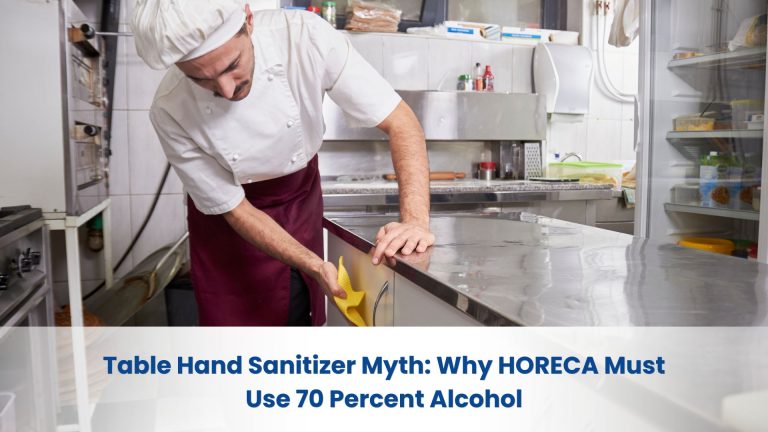
In HORECA and food manufacturing areas, sanitizers are used dozens of times a day to sterilize dining tables, cutting boards, food process machines, and conveyors. If you use a Methanol-based sanitizer, formic acid and formaldehyde residues will remain on the surfaces of your serving equipment.
When raw food materials come into direct contact with these surfaces, toxic chemical cross-contamination occurs. This clearly destroys safety standards, endangers consumers, and can lead to the revocation of business licenses. You need a solution that evaporates quickly and dries without leaving traces or residues.
Read Also
Restaurant Cutlery Sanitizer: Hygienic & Quick-Drying Solution Without Rinsing
5. Alcohol 70 G: Versatile Sanitizing Solution Meeting KEMENKES RI Standards
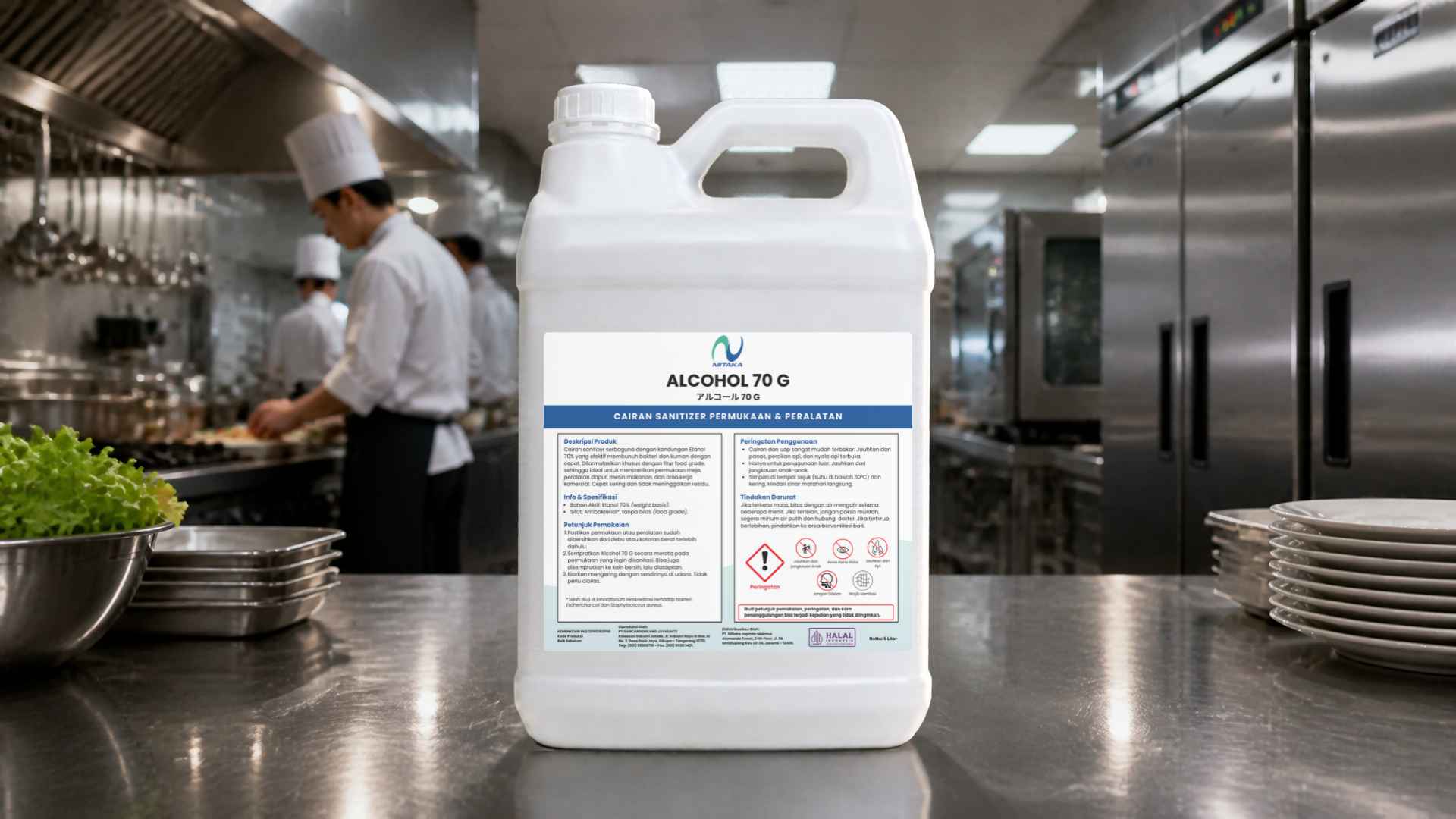
To maintain a high-mobility work environment, you must use liquids specifically designed for commercial areas. Alcohol 70 G from PT Niitaka is a versatile sanitizing solution laboratory-tested to instantly kill Escherichia coli and Staphylococcus aureus bacteria, without compromising your productivity.
Unlike unlicensed bulk products, Alcohol 70 G offers guaranteed legality and an industrial-grade formulation:
- Active Ingredient Ethanol 70% (Weight Basis): Highly safe for application on surfaces that come into direct contact with food (Food Grade).
- Quick-Drying System (Practical & No-Rinse): Areas and equipment can be used immediately after spraying. Evaporates in the air leaving no residue.
- Extra Safety Protection: Contains a special bittering agent to prevent the risk of accidental ingestion by staff or customers.
- Full Legality: Holds an official distribution permit from KEMENKES RI PKD 20502620110 and is Halal Certified (ID36410079358760826).
Standard Operating Procedure (SOP) for Alcohol 70 G:
- Initial Cleaning: Ensure the surface or equipment is cleaned of heavy dust or dirt first.
- Spray / Wipe: Spray the 5-liter jerry can liquid evenly onto the target area. It can also be sprayed onto a clean cloth, then wiped.
- Instant Drying: Let it air dry naturally. No rinsing required.
Elevate the hygiene and safety standards of your facility today. Use a disinfectant with guaranteed quality and halal certification for smooth long-term operations.
Contact us to connect via WhatsApp by clicking the button below or by filling out the form.