Rectangular Wire Helical Springs (square wire springs) are the ideal solution for industrial machines that require massive load capacities (heavy loads) but only have confined spaces that cannot accommodate standard round wire springs. These springs are molded using special techniques to prevent twisting during the coiling process. Another key advantage is their high durability in extreme environments, including temperatures above 100°C, freezing temperatures of -20°C, and areas exposed to seawater and industrial wastewater. A “high-mix, low-volume” manufacturing system allows you to order these custom springs even in small lots of 1 or 2 pieces.
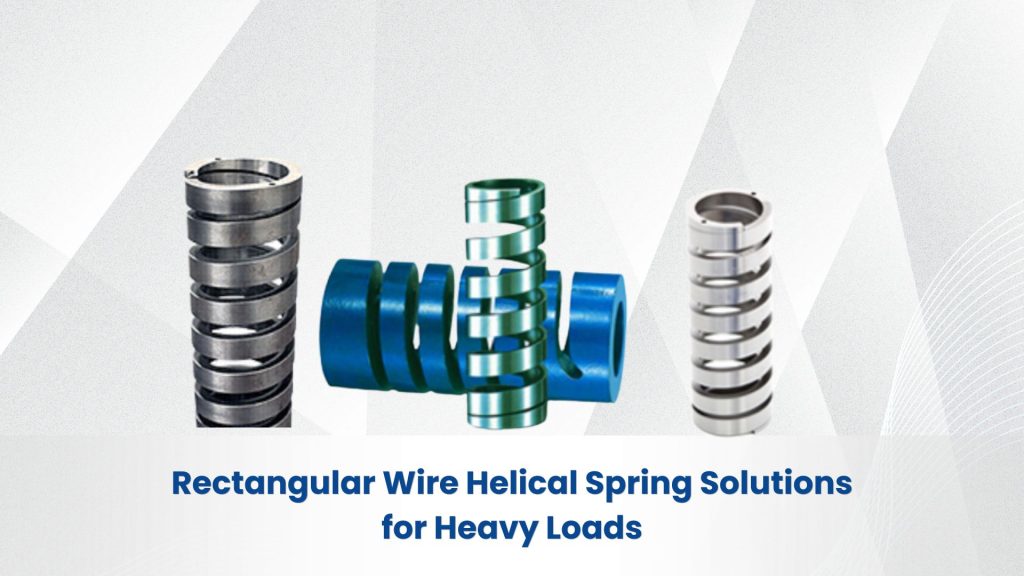
When designing high-capacity industrial machines, engineers often face a major dilemma: the machine requires a spring capable of withstanding extreme loads, but the available space within the components is highly limited. Using standard round cross-section coil springs often falls short because they cannot generate the required force in such a confined area.
The best solution to overcome this structural issue is by utilizing Rectangular Wire Helical Springs. As one of the heavy-duty types of industrial springs, this square wire spring is specifically designed to maximize energy absorption within highly compact machine dimensions.
What is a Rectangular Wire Helical Spring?
Unlike conventional springs made from cylindrical wire, a rectangular wire helical spring is manufactured from steel material with a rectangular or square cross-section. This specific shape allows it to absorb significantly more energy compared to a round wire spring of an equivalent physical size.
The manufacturing process is also highly unique. Before the coiling process begins, the wire material is actually shaped into a trapezoid. Only after the coiling is completed does the material stretch and form a precise, clean rectangular or square cross-section.
Key Advantages of Square Wire Springs
1. High-Precision Molding for Heavy Loads
The absolute advantage of a rectangular wire spring is its ability to withstand massive loads in a compact size. If you frequently experience insufficient load capacity when using a standard round coil spring, or if you are concerned about the spring sliding or shifting on the spindle, switching to a square wire is the answer for when you should use a custom spring to increase your heavy equipment’s efficiency.
2. Anti-Twisting Molding Technique
Although square springs have become a common standard for press dies components, manufacturing them on a custom basis is notoriously difficult. Square materials are highly susceptible to twisting when bent by a coiling machine. However, world-class manufacturers utilize specific trademark techniques that ensure the wire can be coiled smoothly—whether for giant-scale or micro springs—without damaging the material’s internal structure.
3. Extreme Durability in All Environments (Corrosion & Heat Resistance)
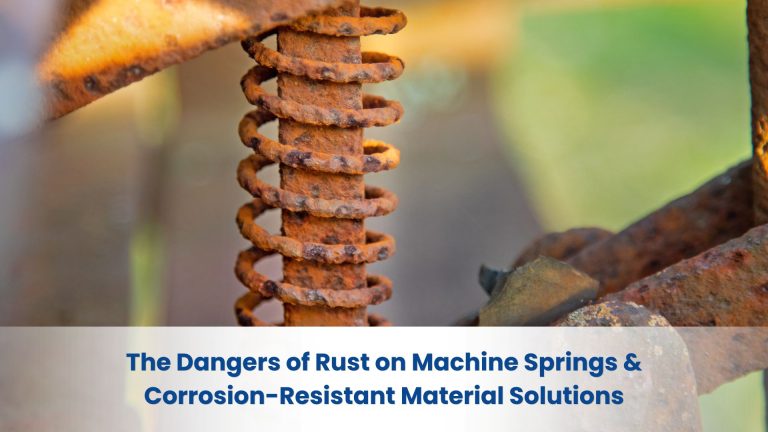
Industrial springs are very sensitive to temperature changes and corrosive atmospheres that can trigger rust. As a high-precision spring manufacturer, every production of rectangular springs passes through strict daily verifications to ensure stable performance in extreme environments. This includes high heat (100°C or more), freezing temperatures (-20°C or lower), and areas directly exposed to seawater and industrial wastewater.
Flexible Production Services: From Prototypes to Full Scale
Often, machine manufacturers only need a few pieces of specialized springs for research and development stages or emergency repairs. You do not need to worry about burdensome Minimum Order Quantities (MOQ). A High-mix, low-volume manufacturing system allows you to design and order custom square springs even in extremely small quantities (lots of 1 or 2 pieces).
Order Your Custom Rectangular Spring at Niitaka
Do not let machine space limitations lower the capacity standards of your production equipment. Niitaka is ready to help you design and supply high-quality Rectangular Wire Helical Springs on time and precisely according to your machine’s load tolerances.
Contact Niitaka’s team of experts today to discuss your square wire spring design specifications and acquire industrial components that guarantee uncompromising reliability.
The main difference lies in the cross-section of the wire. Regular springs use round/cylindrical wires, whereas rectangular springs use square or rectangular-shaped wires. This square shape allows them to absorb and withstand significantly more mechanical energy within the same confined machine space.
Manufacturing is difficult because square steel material is highly prone to twisting or deforming when forced into a coil by a spring-making machine. High-precision molding techniques are required (such as forming the material into a trapezoid before coiling) so that the final result forms a clean and perfect square cross-section without structural damage.
This type of spring has become a mandatory standard component in press dies, precision spindles, heavy machinery, and any industrial mechanism that faces load capacity issues when using standard round springs.
They are very safe if custom-manufactured using specialized materials. Reliable spring manufacturers can produce square springs that are proven to be rust-resistant, resistant to seawater and industrial wastewater, and capable of operating optimally in high heat (up to over 100°C) as well as extreme freezing temperatures (-20°C and below).